Event Security
How to choose the best concert security staffing service
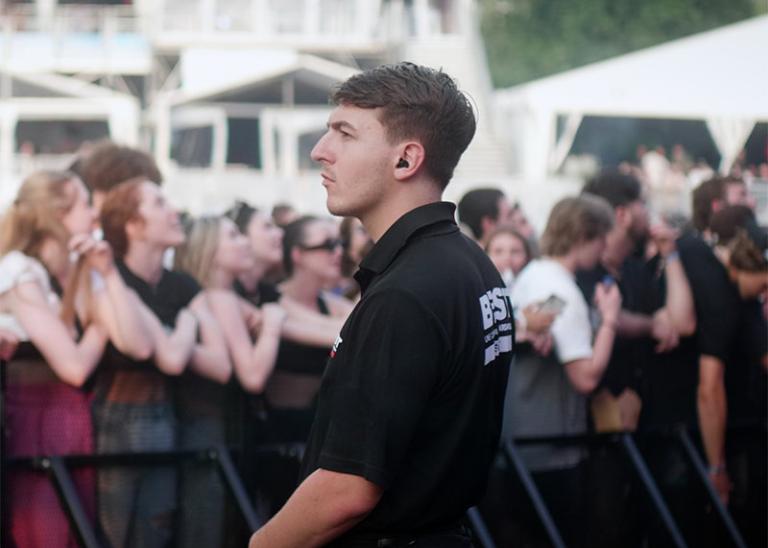
When the doors open, a concert’s security plan becomes a live operation. Attendees arrive in waves, queues build, the opening act begins, and people move between entrances, seating, concessions and the floor. A provider’s ability to fill positions matters, but the more useful question is whether its staffing plan fits the event and can adapt as conditions change.
That distinction is especially important when an event includes a high-profile performer or VIP guests. As discussed in our guide to how VIP guests affect corporate event security planning, guest movement, access boundaries and crowd flow are connected. Concert organizers can use the same planning mindset when comparing security staffing services: look for a team that understands the whole guest journey, not only the post list.
Start with the concert and venue
A strong proposal should begin with questions about the event: expected attendance and arrival patterns, venue layout, entry points, standing and seated areas, performance schedule, audience profile, and any backstage or VIP requirements. Outdoor festivals, arena shows and theater concerts create different staffing needs. Even two events at the same venue may require different deployments.
Ask how the provider uses that information to recommend coverage. The plan should identify key posts and zones, such as screening lanes, queues, barricades, concourses, backstage access, parking areas and exits. It should explain why personnel are assigned there and how coverage changes during peak arrival, set changes, the headliner and dispersal. A proposal that offers one headcount without showing where and when people are needed is difficult to assess.
Compare responsibilities, not just job titles
Event staffing can include security personnel, screeners, bag checkers, ticket scanners, ushers, guest service teams, parking support and supervisors. Those roles may work together, but they do not have identical responsibilities. Ask the provider to define each position, its authority, reporting line and handoffs with venue staff, promoters, production teams and emergency responders.
Clarify who monitors entrances, who addresses access concerns, who directs attendees, and who escalates an incident. If the event has a VIP arrival, backstage area or restricted production zone, ask how credentials are checked and how exceptions are approved. Where screening equipment or venue systems are involved, confirm who operates them and who responds when a concern is identified.
BEST’s crowd management strategies for special events describe why staffing and placement should reflect venue flow and the guest experience. When evaluating a provider, look for that same connection between each role and a practical event need.
Check supervision and response coordination
A staffing roster does not show how a team will be led. Ask who serves as the on-site lead, how supervisors communicate with the event command team, and what coverage is in place if a person is late, absent or reassigned. Confirm how staff receive updates about schedule changes, entry adjustments, weather conditions or a developing crowd concern.
The provider should be able to explain its incident reporting and escalation process in plain terms. Ask what information gets documented, who receives it, how urgent issues are communicated and how the provider coordinates with the venue’s existing emergency procedures. The event organizer and venue retain their own responsibilities, so roles should be clear before event day.
Evaluate training and service continuity
Ask how personnel are prepared for the specific venue and assignment. Orientation should cover post duties, access rules, radio procedures, guest interaction, emergency communication and when to seek a supervisor. For a multi-date tour or recurring concert series, find out how the provider maintains consistency while onboarding new team members and adapting to local venue requirements.
Also ask how staffing levels are confirmed as the event approaches. A provider should be able to describe its recruiting, scheduling, attendance checks and replacement process, along with the lead time it needs for changes. Discuss the plan for delays, callouts or a late change in scope. These details help organizers judge whether the proposed coverage is workable, not just attractive on paper.
Compare proposals on a shared scorecard
Give each provider the same event details and ask for comparable information: a role-by-role staffing plan, post locations and timing, supervision structure, training and orientation, communication and escalation procedures, contingency coverage, and reporting after the event. Then compare how clearly each proposal connects its recommendations to your venue and schedule. Price matters, but it should be considered alongside scope, oversight and service continuity.
The best event security staffing service for a concert is the one that can explain its plan, staff the roles it recommends, coordinate with the event team and adjust responsibly when the operation changes. A clear evaluation process helps organizers select support that protects safe movement while preserving the experience people came to enjoy.
To discuss concert security, crowd management and guest services for an upcoming event.