Special Events
How Organizations Can Maintain Safety, Continuity, and Control During Workplace Disruptions
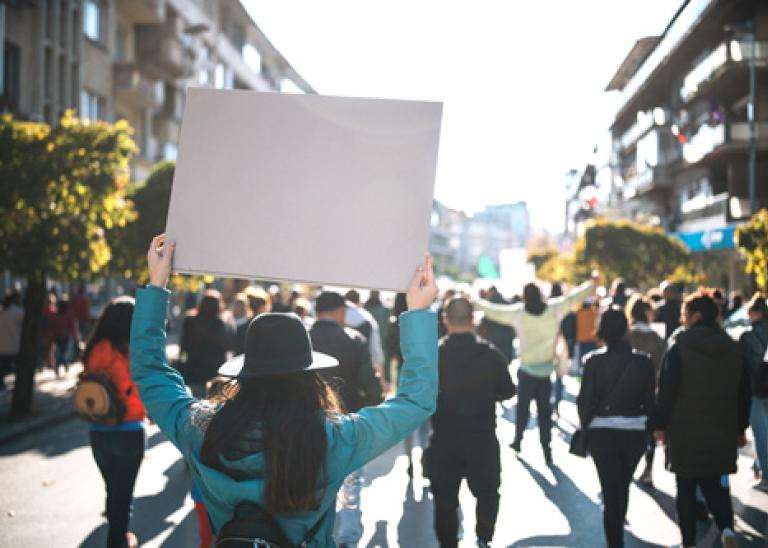
Labor unrest can create operational challenges that extend well beyond the workplace dispute itself.
When organizations face employee demonstrations, picketing activity, protests, or heightened tensions around a labor action, the priority is not confrontation. It is maintaining a safe, orderly environment where people can move, operations can continue, and concerns can be managed with professionalism and control.
These situations are often dynamic. Conditions can shift quickly as crowds gather, traffic patterns change, media attention increases, or emotions intensify near entrances, parking areas, loading zones, and public-facing spaces. Without a clear plan, even manageable issues can create confusion, disruption, and unnecessary risk.
That is why preparation matters.
Labor Unrest Creates Unique Operational Pressures
Labor actions are not ordinary security situations. They often involve a combination of people, visibility, emotion, and operational complexity. Employees, visitors, vendors, customers, contractors, media, and members of the public may all interact with the same site at the same time.
For employers and property operators, the challenge is practical: how do you maintain safe access, reduce disruption, and support business continuity while respecting lawful activity?
Common pressure points include:
- Congestion near entrances and exits
- Increased pedestrian and vehicle activity
- Parking lot disruption
- Visitor confusion
- Employee safety concerns
- Attempts to access restricted areas
- Delays at loading docks or service entrances
- Heightened emotional exchanges
- Increased media or public attention
- Unclear escalation procedures
“The goal is not to overreact. The goal is to anticipate where friction may occur and create a plan before it becomes a problem.”
Start with a Site-Specific Readiness Review
Every workplace disruption has its own operating environment. A manufacturing site, office tower, hospital, campus, warehouse, entertainment venue, and corporate headquarters will each face different risks during labor unrest.
A site-specific readiness review helps organizations identify vulnerabilities before activity begins. Leaders should ask:
- Where are people most likely to gather?
- Which entrances, exits, parking areas, and loading zones require added visibility?
- How will employees, visitors, contractors, and vendors be directed?
- Which areas must remain restricted?
- Who is responsible for monitoring changing conditions?
- How will incidents be reported and escalated?
- Who will communicate with site leadership, law enforcement, emergency services, and other stakeholders?
- What staffing support may be needed if conditions change quickly?
These questions help shift the organization from reactive decision-making to practical operational readiness.
Why Crowd Management Matters During Labor Actions
Labor unrest is not only a security issue. It is also a crowd management issue.
When people gather near a workplace, the way movement is managed matters. Clear direction, visible staffing, defined access points, and calm communication can reduce confusion and help prevent smaller issues from escalating.
Professional crowd management support can help organizations:
- Maintain clear entry and exit routes
- Support safe movement around the property
- Direct visitors, vendors, and employees
- Monitor gathering areas
- Identify early signs of escalation
- Reduce confusion around access procedures
- Support communication between site teams and leadership
- Preserve a more orderly environment during a sensitive situation
This is where experience matters. Personnel must understand how to maintain presence without escalating tension. They must be visible, professional, and prepared to adapt as conditions change.
Visible Presence Can Help Reduce Uncertainty
During labor unrest, uncertainty can increase tension. Employees may be unsure where to enter. Visitors may not know where to park. Vendors may face delays. Managers may be unclear about when to escalate a concern.
A trained, visible security presence helps bring structure to that environment.
The right personnel can provide direction, reinforce access procedures, observe changing conditions, and support reporting. Their role is not to insert themselves into the labor issue. Their role is to help maintain safety, order, and continuity around the site.
That distinction matters.
A calm and professional posture can help reduce anxiety while supporting the organization’s operational needs. In sensitive environments, how personnel communicate and present themselves is just as important as where they are positioned.
De-Escalation and Communication Are Essential
Labor unrest can involve strong emotions. That makes communication and de-escalation critical.
Security and crowd management teams should be prepared to recognize early warning signs such as agitation, crowding near access points, repeated rule violations, attempts to bypass restricted areas, or increasingly tense verbal exchanges.
When teams are trained to observe, report, and respond appropriately, they are better positioned to address concerns before they grow. Strong de-escalation does not depend on forceful action. It depends on awareness, patience, communication, and clear procedures.
Organizations should also define communication pathways before a disruption occurs. Site leaders, security teams, legal teams, HR, facilities, communications, and local authorities may all have roles to play. When responsibilities are unclear, response becomes slower and less consistent.
Protecting Business Continuity During Workplace Disruption
Labor unrest can affect more than the front entrance. It can disrupt deliveries, delay shift changes, affect customer access, create parking challenges, increase pressure on frontline teams, and complicate daily operations.
A strong plan should account for:
- Employee arrival and departure routes
- Visitor and vendor access
- Executive and VIP movement
- Parking and traffic flow
- Loading dock operations
- Restricted areas
- Emergency vehicle access
- Incident documentation
- After-hours coverage
- Communication with internal stakeholders
“The strongest plans are not built around a single scenario. They are flexible enough to adapt as conditions change.”
What Strong Labor Unrest Preparedness Looks Like
Organizations preparing for labor unrest should focus on operational clarity, not just added coverage.
A practical plan may include:
- A site-specific risk assessment
- Updated post orders and access procedures
- Clear escalation protocols
- Defined roles for internal and external stakeholders
- Parking and traffic management plans
- Visitor and vendor direction
- Incident reporting workflows
- Communication protocols with local authorities
- Flexible staffing plans
- Trained personnel with crowd management and de-escalation experience
- Business continuity planning for high-risk periods
These measures help organizations maintain control without creating unnecessary friction.
How BEST Crowd Management Can Support Labor Unrest Readiness
BEST Crowd Management helps organizations prepare for complex, high-visibility environments where safety, movement, and operational continuity matter.
With deep experience supporting stadiums, arenas, convention centers, festivals, corporate events, civic gatherings, and other large-scale environments, BEST brings practical crowd management expertise to situations where people, access, and coordination must be managed carefully.
During labor unrest, BEST can support organizations with:
- Crowd management planning
- Access point support
- Entry and exit monitoring
- Parking and traffic coordination
- Visible personnel presence
- Visitor and vendor direction
- Situational awareness
- Incident reporting
- De-escalation support
- Flexible staffing during changing conditions
- Coordination with site leadership and local stakeholders
BEST’s role is to help organizations maintain safe, orderly, and professional environments during periods of uncertainty.
Preparation Helps Organizations Respond with Confidence
Organizations cannot always predict when labor tensions will arise. But they can prepare for the operational realities that often come with demonstrations, picketing activity, protests, and workplace disruption.
With the right plan, trained personnel, and experienced crowd management support, organizations can reduce confusion, protect access, support employees and visitors, and maintain continuity during sensitive situations.
Labor unrest requires a steady approach. The goal is not to escalate. The goal is to protect people, preserve operations, and help the organization respond with confidence and control.
Preparing for a labor action, demonstration, or workplace disruption?
Talk with a BEST Crowd Management expert about strategies to support safety, site access, and operational continuity during dynamic situations.